
Close
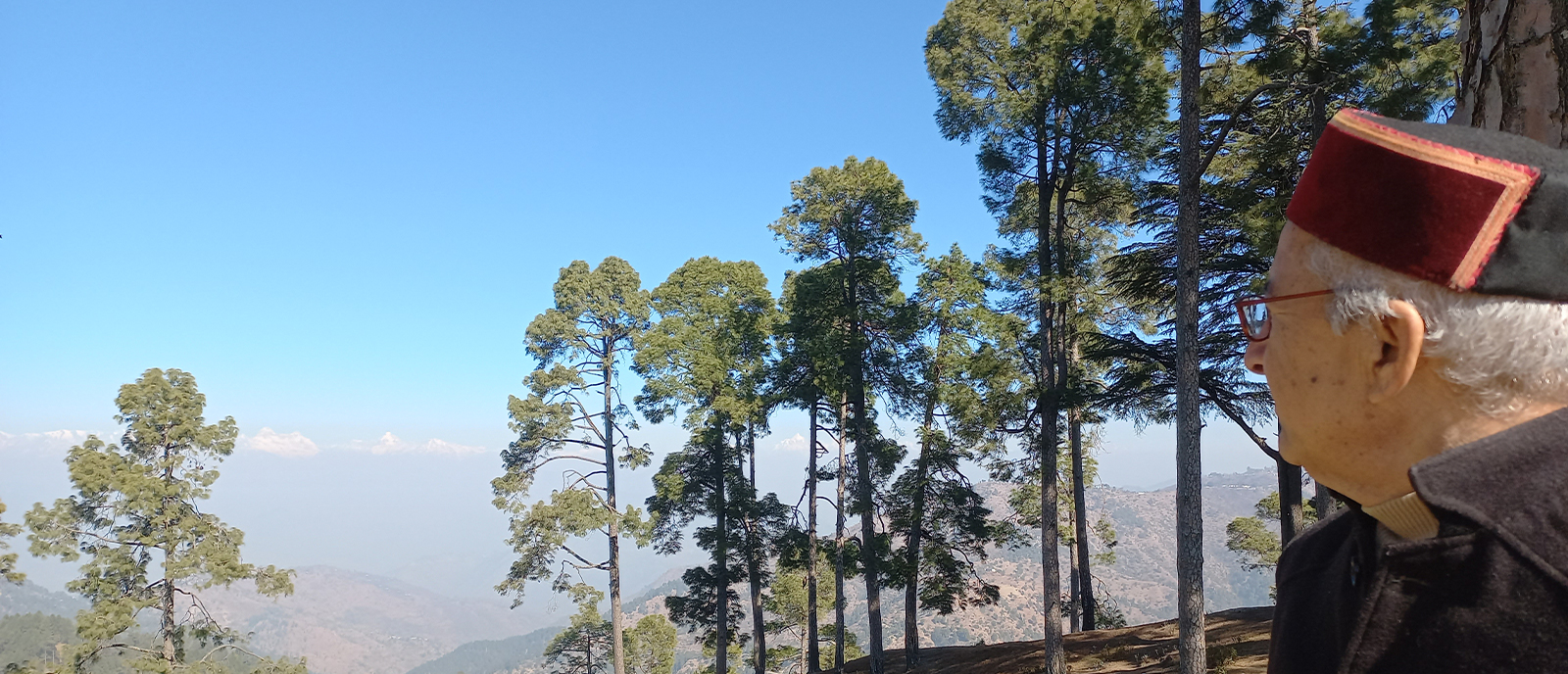
“The history of Uttarakhand is shaped by two ancient sacred regions: Kedar Khand and Manas Khand. These territories, rooted in scriptural texts dating back to the 6th century BCE, have defined the state’s cultural and geographical identity for millennia. Kedar Khand includes the Garhwal region with its revered Kedarnath and Badrinath shrines. Manas Khand covers the Kumaon area, home to Jageshwar and Purnagiri.”
In order to save the earth, Lord Vishnu in his second incarnation assumed the form of the Kurma (Tortoise) and remained standing for three years at a particular spot in the district. The specific rock on which the God stood came to be known as Kurmashila, the entire hill as the Kurmachala and the surrounding forest as Kurmavana. It is from these terms that the name Kumaon is supposed to have been derived.
For a long time the name, in the form of Kali Kumaon, that is Kumaon on the river Kali remained confined to the small tracts around the hill, now roughly covered by the Champawat district.
The district gets its name from princess Champawati, the daughter of King Arjun Deo who ruled the region in historic time and had capital in Champawat.
The area covered by the district lies in the part of Central Himalayas, which is also recognized as the Manas-Khand in the Manas-Khanda (section) of the Skand Purana as one of the five divisions of the Himalayan region. The region has also been known in different times by the names of Kiratamandala, Khasadesha, Kalindavishaya, Kurmachala and Kurmavana.
The folklores describe the significant presence of the region during Mahabharata period. Mahabharata dates back to Dwapar Yuga when lord Vishnu had incarnated as Lord Krishna and supported Pandavas in the holy war at Kurukshetra.
Many legends are associated with different places, mountains, rivers, forests and other sites in the Champawat district. Barahi temple of Devidhura, Sapteshwar temple of Sipti, Hidimba-Ghatotkach temple and Tarkeshwar temple of Champawat town are believed to date back to the Mahabharata era.
The region is traditionally associated with Gods and Demons (the Devas and Asuras respectively) and as the place of penance for Rishis (Hindu ascetics).
During the medieval period, when the power of the Chand Rajas of Champawat expanded rapidly, the name Kumaon gradually came to denote the entire region extending from the snowy ranges in the north to the Terai in the south.
After the Mahabharata war the district seems to have remained for some time under the sway of the kings of Hastinapur, while the actual rulers (the local chiefs) were mostly Khasas or Kulindas who continued to rule over the different parts of the district for centuries. Subsequently the Nagas appeared to have held dominion of the district.
During the 4th to 5th century B.C. the area was ruled by Nanda kings of Magadh. The earliest coins discovered in the district bear the name of rulers – Kulindas. During the last quarter of the 1st century A.D., the Kushan empire extended over the western and central Himalayas. Around the 2nd quarter of the 3rd century the empire of the Kushans crumbled down. Chinese pilgrim Hiuen Tsang visited the present area of the district during the summer of 636 A.D.
After the decline of the Katyuris, Chand Rajputs reunited the whole of Kumaon under one rule. According to tradition, Brahmdeva, the Katyuri Raja (Hindu ruler) of Kali Kumaon, was a weak ruler. He was troubled by the insubordination of the Rawat of Domkot and also found himself unable to suppress the formidable factions among his own people. He was succeeded by Som Chand, a Chandravanshi Rajput, who married the daughter of the raja. Som Chand began his reign in the year 953 A.D. and ruled for about twenty years i.e. till 974 A.D.
Som Chand had built his fort on 15 acres of land. This fort was named Rajbunga and later Champawat. Som Chand was succeeded by his son, Atma Chand who continued the work of consolidating the power and influence of the small kingdom and it is said that the rulers of all the neighbouring petty states paid court to him at Champawat. His son Puran Chand spent much of his time in hunting, and the latter’s son and successor Indra Chand is credited with importing silk worms into Kali Kumaon, probably from Nepal and thus introducing the manufacture of silk in these parts.
They followed Sansar Chand, Sudha Chand, Hammira or Hari Chand and Bina Chand one after the others up to the years 1725 with Debi Chand being the last Raja. In 1726 he was assassinated by an agent of his own wily minister in his pleasure house. Thereafter, the two Gaira Bists assumed full control of administration and were free to enjoy the power they had so acquired.
The entire Kumaon region was ceded to British on December 2, 1815. Around the beginning of the 20th century, the inhabitants of the district began to become gradually conscious of their civic rights and they took part in the annual sessions of the Indian National Congress and on August 15, 1947, the area was declared independent of British domination along with rest of the country.
Champawat was declared as a separate district (only a Tehsil of Pithoragarh district earlier) on 15 Dec. 1997 by then CM of UP Ms. Mayawati (when it was still a part of UP).
Khetala Kumaon Homestay, adjacent to Village Joshura in the Holi-Piplati Gram Panchayat (in Block Pati of district Champawat) is a perfect getaway spot (an exclusive and authentic rural retreat) to rest and relax for the sustainable ecotourism enthusiasts. It also doubles up as a centrally located gateway to the cultural hotspot of the Kali Kumaon Region (of Manas Khand), equidistant to the region’s temple tourism locations.
Book direct and enjoy the lowest rates available!
Book direct and enjoy exclusive offers
Many websites charge extra fees for bookings; we do not.

Tel.: (+91) 9410914801
Tel.: (+91) 8218248442
kkpchome23@gmail.com
homestay@khetalakumaon.in
Village Joshura (Holi-Piplati), 4th Kilometer from Dhunaghat
on Lohaghat-Ritha Sahib Motor Road, Block Pati, Champawat, Uttarakhand
WhatsApp us